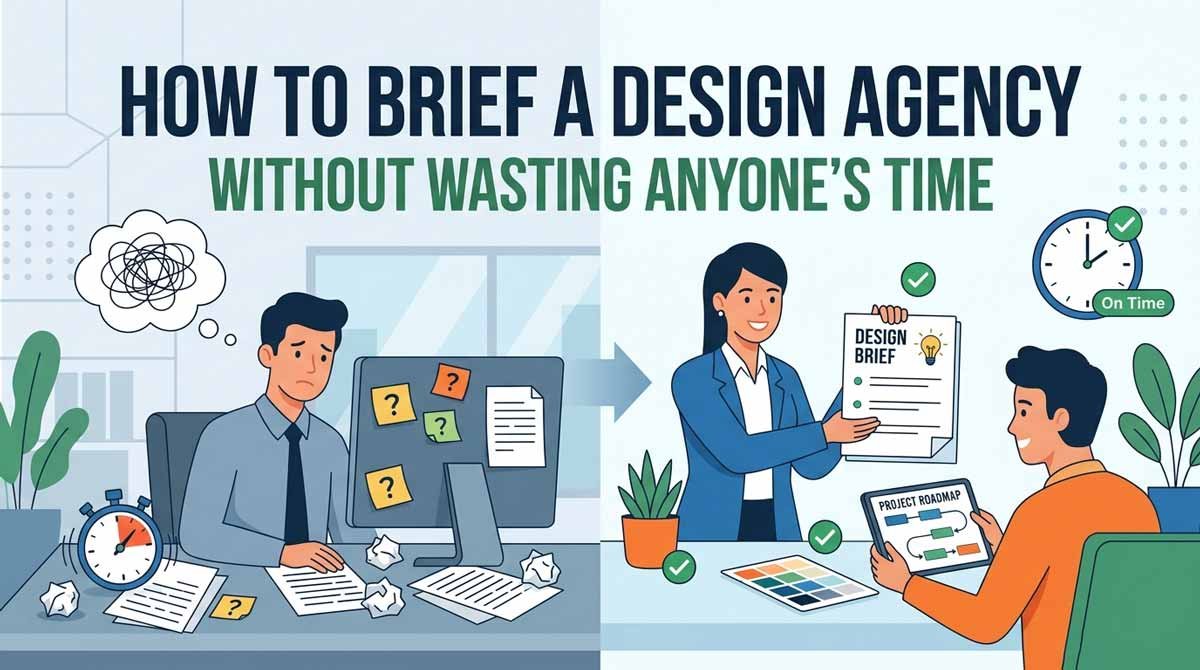
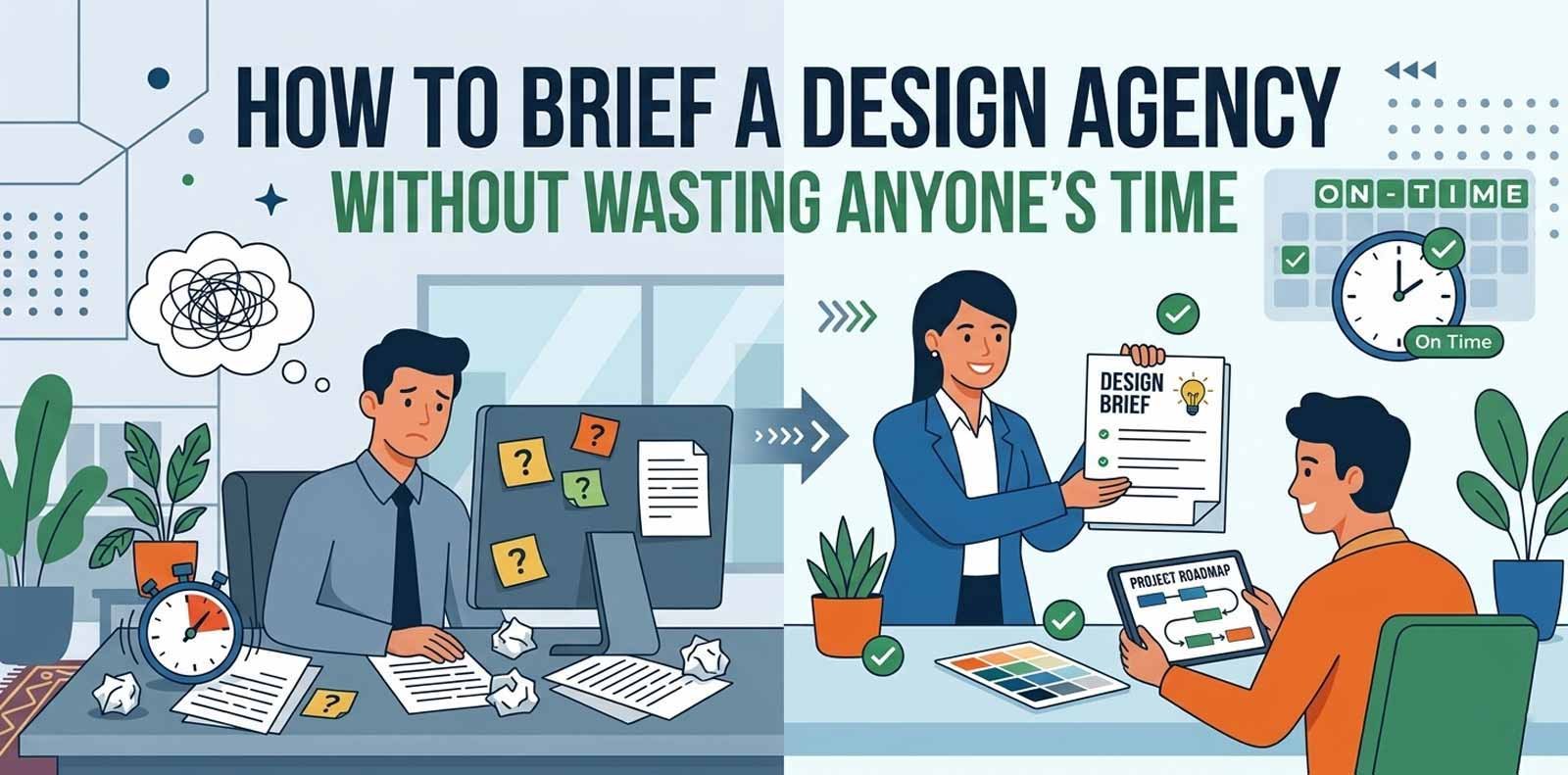
Most design projects don't fail because of talent or budget. They fail because nobody wrote a good brief. The designer had to guess. The client reviewed something they didn't expect. Everyone spent three rounds of revisions getting to what could have been the first draft.
A brief exists to close that gap. Not a long document filled with corporate language, but a focused summary of what you're actually trying to achieve. When it's done well, it saves time on both sides and produces work that lands closer to right on the first pass.
Start with the outcome, not the output
The most common mistake in any brief is describing what you want to receive instead of what you want to achieve. "We need a new logo" is an output. "We need to position ourselves as a premium service in a market that sees us as a mid-tier option" is an outcome. The first tells a designer what to make. The second gives them a reason to make something that actually works.
Good designers make decisions based on goals. When your brief explains the outcome you're after, you give the agency room to find the best solution rather than just execute a half-specified request. The output they produce becomes something you didn't have to imagine in advance.
Design is not decoration. It is communication. A brief that explains what needs to be communicated will always produce better work than one that specifies how it should look.
What every brief needs to cover
You don't need a template. But there are six things the other side needs to know before the work can start.
The problem
What is not working right now, and why does it matter? Be honest here. If your website isn't converting visitors into leads, say that. If your current branding makes you look like a ten-year-old business when you're three months old, say that. Agencies work better when they know the real problem, not the polished version of it.
Your audience
Who is this for? Not a demographic, but an actual person. What do they care about, what do they distrust, and what makes them choose one option over another? "Business owners aged 25 to 45" is not useful. "A first-time founder who has been burned by a freelancer and is now evaluating agencies with real scrutiny" is. The more specific you are, the more precisely the design can speak to that person.
Examples you like and dislike
Reference is not plagiarism. Sharing three or four examples of work you find compelling, and a few you don't, gives the designer a faster path to your taste than any amount of adjectives. Include work from outside your industry. It tends to be more useful because it removes the noise of familiar competitors.
Constraints
Budget, timeline, technical requirements, brand guidelines already in place. Share these at the start. Nothing derails a project faster than discovering late in the process that a proposed solution isn't feasible due to a constraint the agency didn't know about.
How you will measure success
Define this before the project starts. It protects you from shifting goalposts and helps the agency understand what they're actually being measured against. "It feels right" is not a success criterion. "It converts more visitors to leads" or "it passes an internal brand review without revision requests" is.
Who makes final decisions
Name the person who has final sign-off. One person, not a committee. Projects that route through five stakeholders at every review stage are almost impossible to move quickly and tend to produce work that has been averaged into mediocrity. If multiple approvals are required, state that upfront so timelines can account for it.
What to leave out
A brief is not a specification document. Leave out detailed instructions about how the design should look unless you're working within a strict brand system. Don't include company history that isn't relevant to the project. Don't describe competitors unless you're asking for explicit competitive positioning work.
Everything in a brief should serve one of two purposes: helping the agency understand the problem, or helping them understand the constraints. If something doesn't do either, cut it. A shorter, sharper brief almost always produces better results than a thorough one.
The brief as the start of the relationship
A brief is not a one-way document. It's the opening of a conversation. A good agency will respond with questions, and those questions will often sharpen the brief in ways you didn't expect. The goal isn't a perfect document. The goal is giving the other side enough to engage properly.
When both sides share an understanding of what success looks like before the work begins, projects move faster, revisions are fewer, and the final result is closer to what both parties actually wanted. That shared understanding starts with a clear brief and can't really be built any other way.
If you're preparing to brief a design project and want to talk it through before you start, get in touch. We're happy to help you shape the brief before any formal engagement begins.